Back to Products
1 / 2
Research Focus
robots
Architecture
ESP32
RoboticsBeta Phase
Self-Balancing Robot Using PID Control
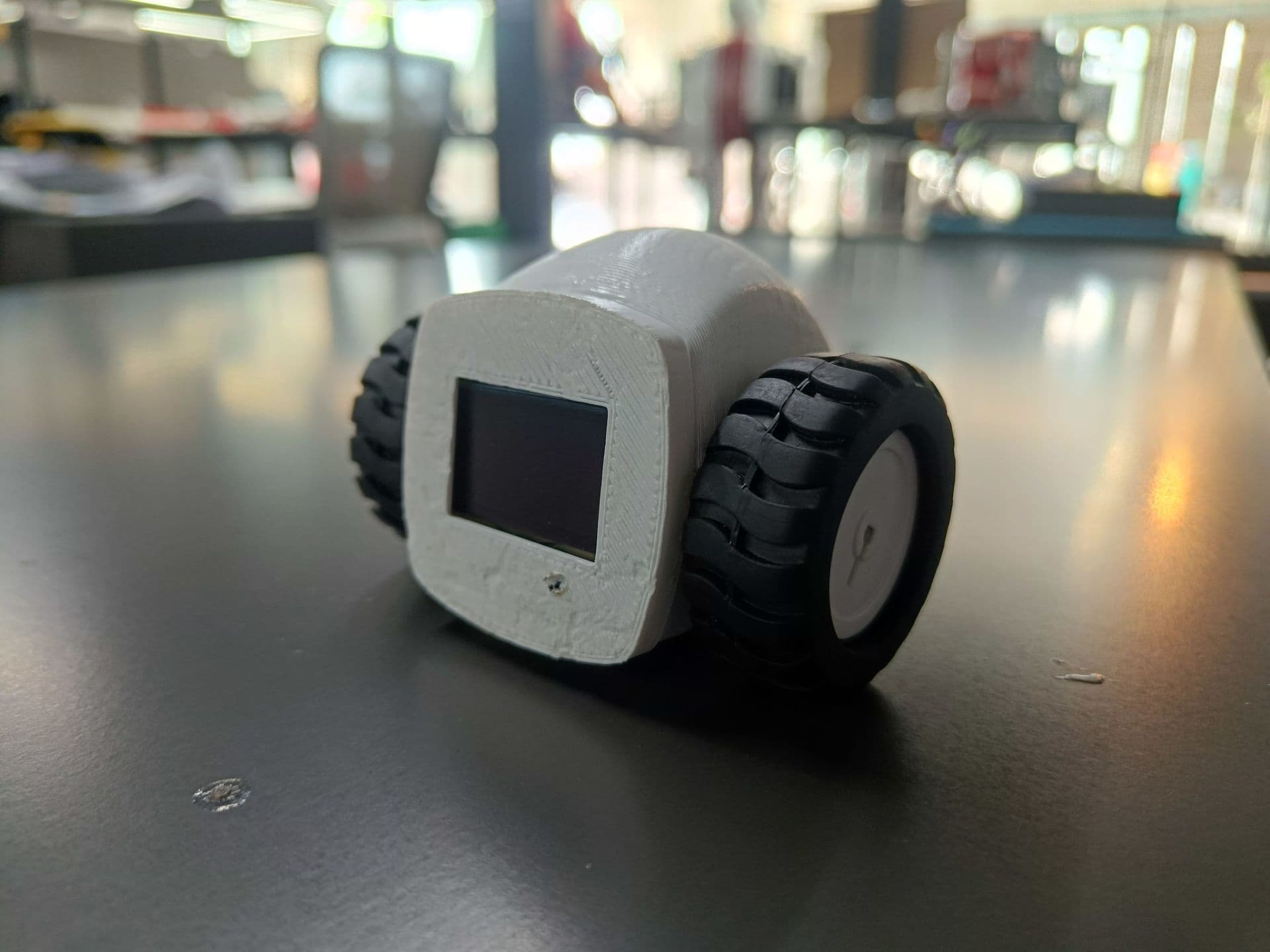
The Self-Balancing Robot is a two-wheeled robotic platform designed to maintain its balance using a PID (Proportional–Integral–Derivative) control algorithm
Innovation Overview
The Self-Balancing Robot is a two-wheeled robotic platform designed to maintain its balance using a PID (Proportional–Integral–Derivative) control algorithm. The system is built around an ESP32 microcontroller and uses an MPU6050 IMU (accelerometer and gyroscope) to continuously measure the robot's tilt angle.
The ESP32 processes the IMU data and computes the required motor corrections through the PID controller. Two NEMA 17 stepper motors, driven by stepper motor drivers, respond instantly to maintain the robot in an upright position.
The robot can be wirelessly controlled using the "ESP32 WiFi Balancing Robot" mobile application, allowing the user to perform the following movements while the balancing algorithm remains active:
Forward
Backward
Rotate Left
Rotate Right
This project demonstrates the implementation of real-time sensor fusion, PID-based balancing, embedded control systems, and wireless robot control, making it an excellent platform for learning control theory and robotics
Research Materials
Related Solutions
Suggested Products
Connect With Us
Ready to Innovate?
Have a question about Self-Balancing Robot Using PID Control or interested in collaborating with our research team? We'd love to hear from you.
Custom Implementation
Research Partnership
Technical Consulting
Send us a message
Connect with our research and operations team.